Introduction
An external glass elevator turns a functional necessity into an architectural landmark. For commercial buildings, hotels, and luxury residences in Lagos, it signals quality and modernity. But what does it cost? This guide walks you through the investment, design choices, and return on value.
Why Choose an External Glass Elevator Over a Concrete Shaft?
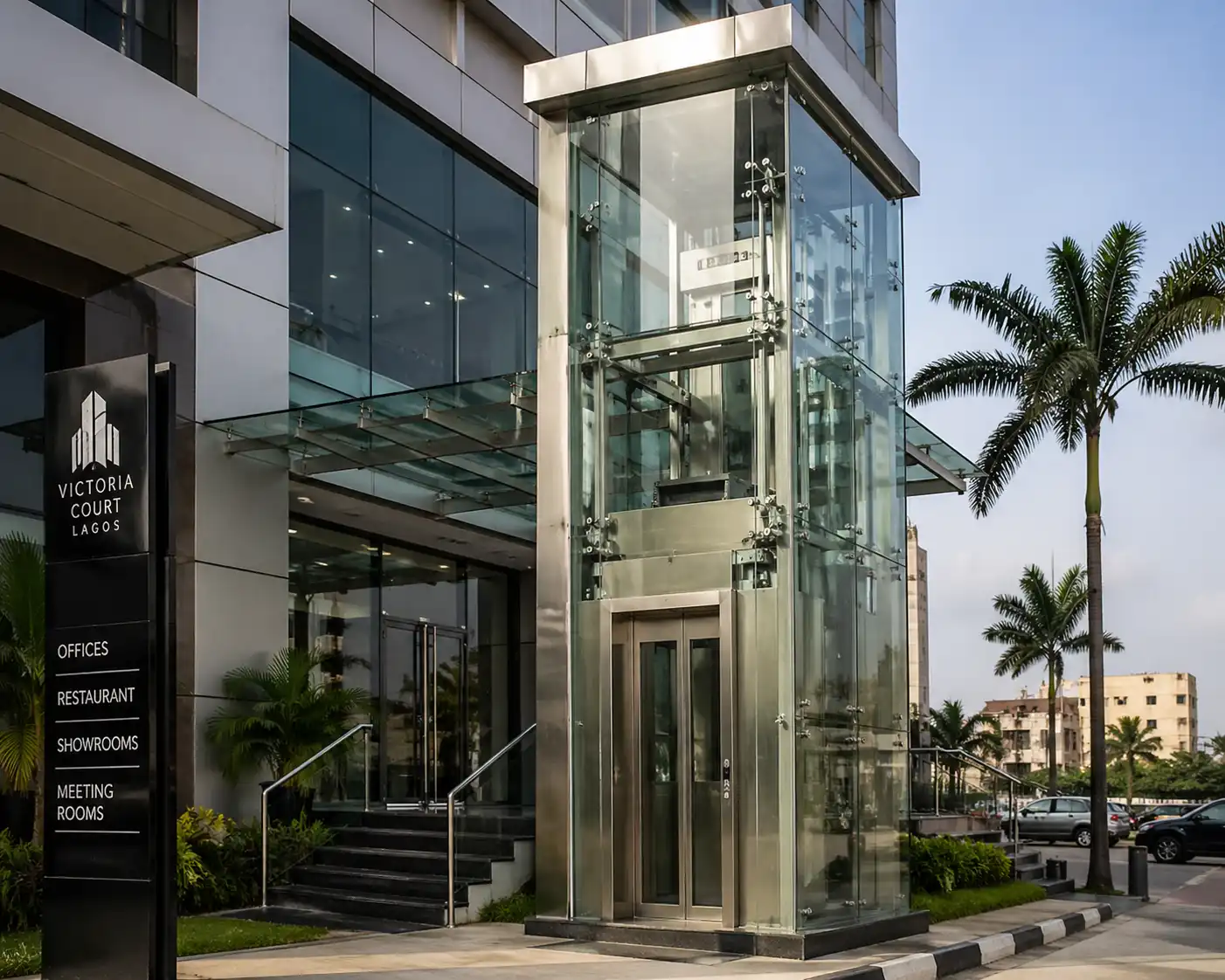
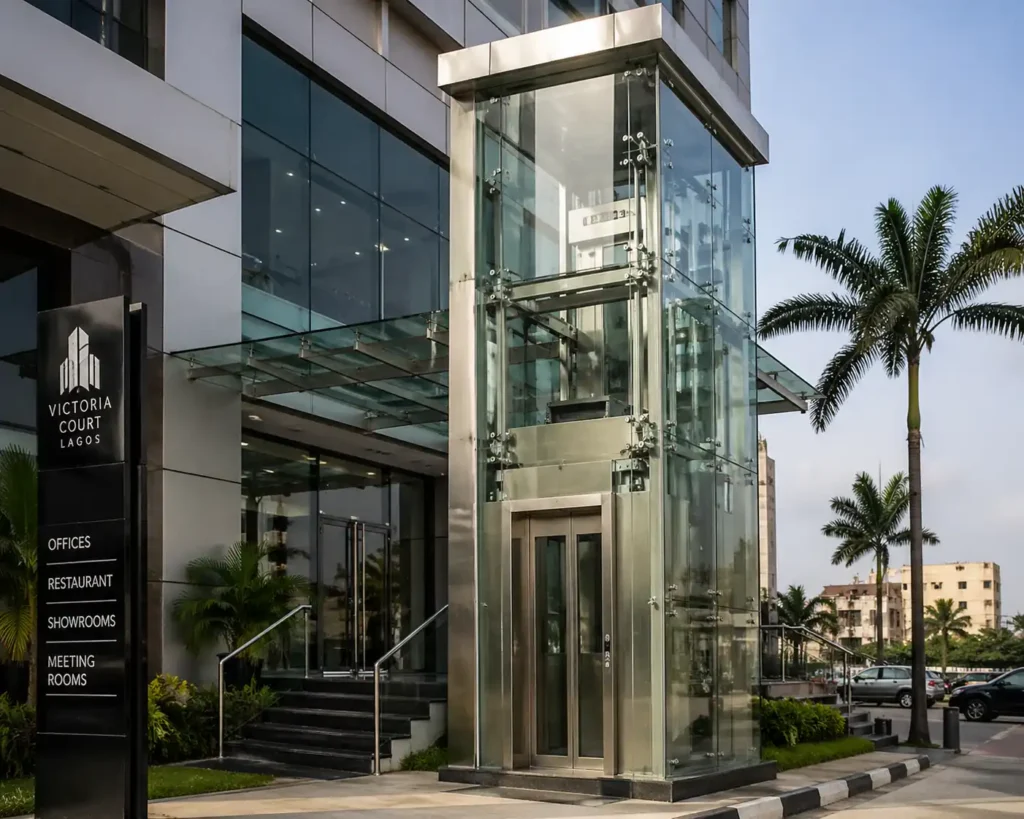
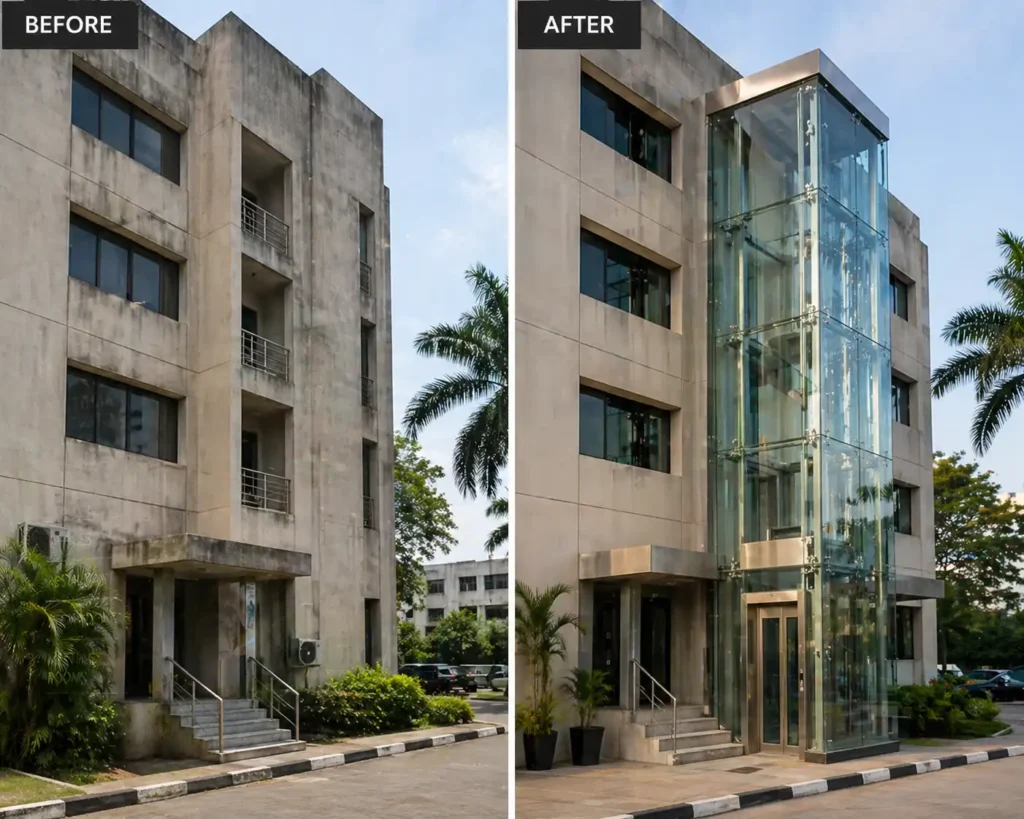
An external glass elevator offers superior natural light, panoramic views, and a premium look that concrete shafts cannot match. Unlike traditional hoistways, glass designs use a minimal external footprint often just two metres by two metres. For property owners in high‑value areas like Victoria Island or Ikoyi, a glass lift strongly signals quality to premium tenants or buyers. For retrofits, the shaft attaches to the exterior wall, so no internal space is lost and occupants face minimal disruption. If your building has no existing shaft, see our complete guide to elevator retrofits in Lagos.
Hard Fact: All glass panels we use meet EN 81‑20 impact resistance standards, the same safety code required for passenger lift doors.
For buildings along the Lagos coast, our glass shafts include corrosion‑resistant stainless steel frames to withstand high salinity. We recommend you consider this option when you want both function and a distinctive facade.
Cost Indicators for an External Glass Elevator in Lagos
We do not publish fixed Naira prices because each project requires a custom design. However, we give you clear relative indicators. The main factors are the number of stops, the type of glass (tempered, laminated, or double‑glazed), and the structural steel framing. The elevator equipment itself – usually an MRL traction unit – also influences the total. To understand MRL pricing and space savings in more detail, read our full MRL elevator cost guide for Nigeria. As a general guide, a basic two‑stop glass lift with standard finishes falls in a mid‑range investment. A five‑stop all‑glass structure with integrated LED lighting commands a premium. A glass shaft costs more than a concrete block shaft, but the added resale value often exceeds that extra investment.
Hard Fact: Every external glass shaft we install is engineered to resist wind loads up to 150 km/h, exceeding Lagos building code requirements.
Projects near the Lagos Lagoon may need extra corrosion protection. We include that in your quote after a free site survey.
Design Options – Make Your Glass Elevator Stand Out
You can choose full glass on all sides or a one‑sided glass solution attached directly to the building wall. Glass types include clear, tinted, frosted, or reflective – each giving a different character. For the framing, we offer stainless steel for a modern look, powder‑coated steel for a budget option, or frameless glass for a high‑end continuous surface. Inside the cab, you can add a glass back wall, LED crown lighting, and touchscreen control panels. These options transform the lift from a utility into a design feature that guests and tenants admire.
Hard Fact: Our tempered glass panels are heat‑soaked to reduce the risk of spontaneous breakage, a recognised safety measure for tropical climates.
For buildings in Abuja’s central business district, we often recommend tinted glass to reduce solar heat gain while maintaining visibility.
Installation Process – What to Expect
We begin with a structural assessment to confirm the building wall can support the shaft. Next, we pour a small concrete foundation for the shaft base. The steel frame and glass panels are fabricated off‑site, which takes four to six weeks. On‑site erection of the frame and glass takes one to two weeks, with minimal internal disruption. Finally, we install the elevator equipment inside the shaft – typically two to three weeks. The total timeline from order to handover is eight to twelve weeks. We manage all logistics so you can focus on your core operations.
Hard Fact: All structural steel for external shafts complies with ISO 898‑1 grade 8.8, ensuring safe attachment to Nigerian masonry or concrete walls.
For retrofits in Surulere or Yaba, we often work around tenants by scheduling on‑site erection during low‑traffic hours.
Case Study – External Glass Elevator for a Boutique Hotel in Victoria Island
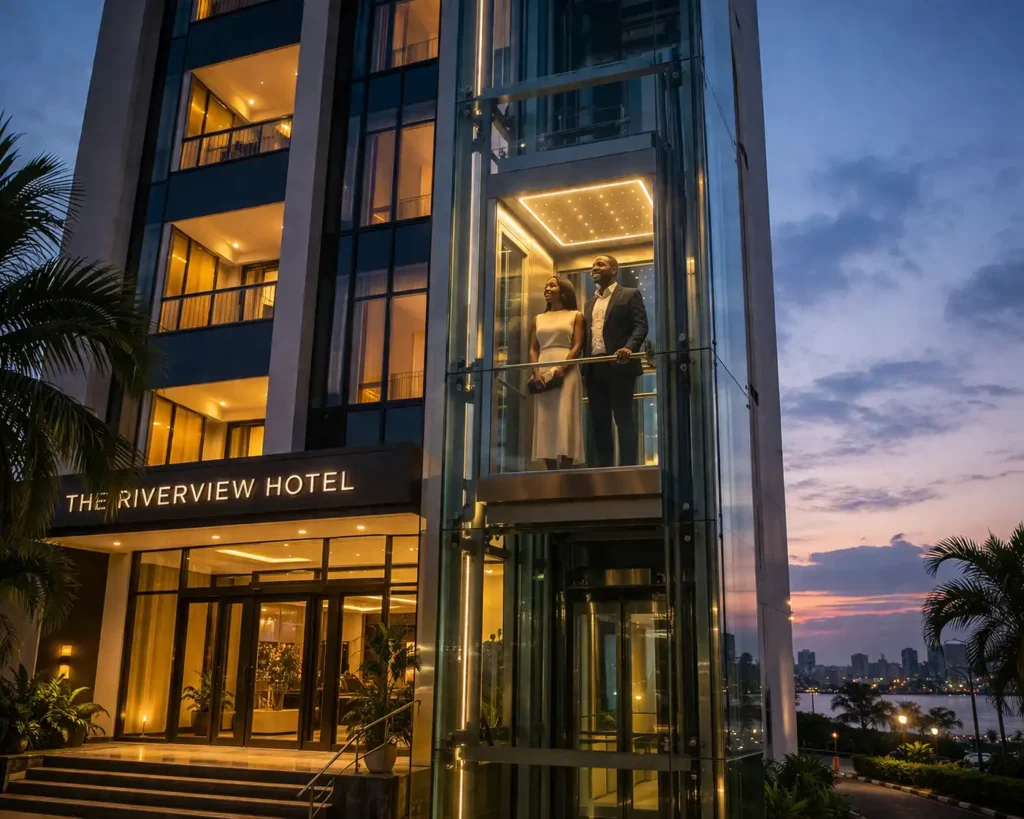
A five‑storey boutique hotel on Victoria Island had no internal space for a lift. We installed an external glass MRL elevator with a stainless steel frame, clear glass, and a backlit cab. The hotel now uses the lift as a marketing feature. Guests pay a premium for the “glass lift experience,” allowing the hotel to raise room rates by fifteen percent. The additional revenue paid back the full investment within eighteen months.
Hard Fact: The elevator’s automatic rescue device (ARD) was tested during a real NEPA outage the first week of operation. The unit safely descended to the nearest floor, and the guest exited without assistance.
The owner later told us that the glass lift became the most photographed spot in the hotel.
Permits and Compliance for External Shafts in Lagos
You need approval from the Lagos State Building Control Agency for structural plans. The Lagos State Fire Service must also approve the external shaft so it does not block fire escape routes. Finally, the elevator equipment requires SON certification before import and after installation. Dove Lifts manages all these permits on your behalf. We submit the documents, schedule inspections, and ensure your lift is fully legal.
Hard Fact: Operating an uncertified external elevator can lead to fines exceeding seven hundred thousand Naira and a building closure order from LASG.
We include permit handling as part of our installation package – no hidden fees or delays.
Frequently Asked Questions (FAQPage schema)
Is an external glass elevator safe during storms or high winds?
Yes. Our glass panels are laminated and tempered, designed to withstand wind loads well above Lagos storm levels. The steel frame is anchored to the building structure with certified fasteners.
Does glass need special cleaning or maintenance?
Yes, but it is straightforward. We recommend cleaning the glass every two to four weeks with a mild detergent and soft cloth. For high‑rise buildings, we can include professional cleaning in your maintenance contract.
Can an external glass elevator be added to a heritage building?
Yes, but the Lagos State Building Control Agency may require a design that does not alter the historic facade. We have done this for buildings in Lagos Island. We can propose a one‑sided glass shaft attached to a rear courtyard.
What is the typical lifespan of the glass panels?
Tempered glass panels last the building’s lifetime if not broken. The laminated interlayer (PVB) remains effective for more than twenty years. We offer a ten‑year warranty on glass and framing.
How does a glass shaft compare to concrete in terms of heat?
Clear glass allows solar heat into the hoistway, which can warm the elevator car. We solve this with tinted glass, reflective coatings, or hoistway ventilation fans – all options we discuss during the design phase.
Transform Your Building
A glass elevator is more than a lift – it is a statement of quality and foresight. We have helped property owners across Lagos, Abuja, and Accra add value and beauty with external glass lifts. Our team handles everything from design to permits to installation.
Contact Dove Lifts for a free design consultation and site assessment. We will visit your building, measure the space, and give you a project‑specific quote – no obligation.