MRL Elevator Price in Nigeria 2026:
Complete Cost & Space Saving Guide
If you are planning a new commercial building, residential duplex, or office complex in Lagos, Abuja, or any major Nigerian city, Machine Room‑Less (MRL) elevators are often the modern standard. This guide explains cost drivers, realistic comparisons to traditional elevators, space savings value, maintenance, Nigerian power protection, and overhead clearance requirements.
But the most common question developers ask is: How much does an MRL elevator cost in Nigeria?
This guide answers that question without guesswork. You will learn how MRL compares financially to traditional elevators, why the space savings alone often justify the investment, what maintenance looks like in our tropical climate, and whether your building has the right dimensions for an MRL.
We do not publish fixed prices because every project is unique — stops, load capacity, speed, finishes, and site conditions all affect the final quote. However, this page gives clear cost indicators and a proven process to get an accurate, no‑obligation price for your building.
Quick answer
MRL elevators usually have a moderate upfront premium compared to traditional machine‑room (MR) elevators of similar specifications, but the total project cost often breaks even when you account for eliminating machine room construction and reclaiming valuable space.
MRL vs Traditional Elevator – A Realistic Cost Comparison
The first question every property owner asks: “Is an MRL elevator more expensive than a traditional machine‑room elevator?”
The short answer: MRL lifts typically carry a moderate upfront premium compared to traditional machine‑room (MR) elevators of the same specifications, but that initial difference is often offset — and sometimes erased — by savings elsewhere.
MRL elevators use a gearless traction machine mounted inside the hoistway (often at the top). The machine, controller, and drive are compact and technologically advanced — permanent‑magnet motors, compact controllers, and precision sheaves — which can increase manufacturing cost.
In practice: for a typical 5‑stop passenger elevator, choosing MRL over MR is often a single‑digit percentage increase in equipment cost.
No machine room construction is the biggest saving. A traditional elevator typically requires 10 to 15 square metres for a dedicated machine room, including slab reinforcement, fire‑rated walls/finishes, secure door, ventilation/cooling, electrical points, and safety equipment.
In Lagos and other high‑cost markets, this can represent millions of Naira in direct cost and lost usable area.
Total project cost – often break even or better
When you add the equipment premium and subtract the machine room savings, the total installed cost of an MRL elevator is frequently comparable to — or even lower than — a traditional elevator. The exact balance depends on layout, construction prices, and how many elevators you need.
Key takeaway: Do not assume MRL is always more expensive. A project‑specific quotation is the only way to know.
Space Savings – How MRL Adds Real Value to Your Building
Space is one of the most undervalued assets in Nigerian real estate. Every square metre you do not waste is square metres you can lease, sell, or enjoy.
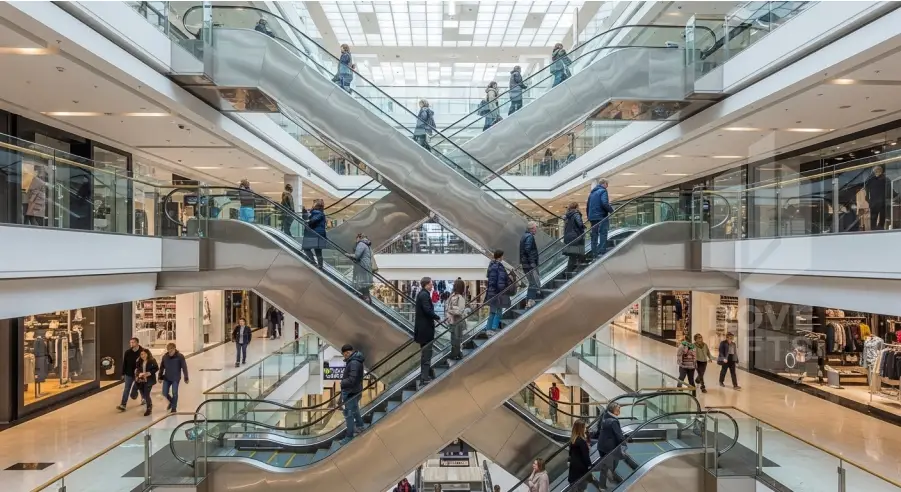
What a traditional machine room costs you
A conventional traction elevator needs a machine room above or beside the hoistway. Even for smaller elevators, technicians need safe access — leading to roughly 10–15 sqm per elevator permanently allocated to machinery.

How MRL eliminates the waste
An MRL integrates the traction machine and governor into the hoistway. The controller is mounted inside the hoistway or a slim wall recess. Net effect: zero extra floor area for elevator machinery.
Real‑world value examples
- Commercial office (Lagos Island): eliminating a 12 sqm machine room can create extra office/storage/retail space with recurring rental value.
- Residential duplex (Lekki): MRL can preserve bedroom or home office space and avoid structural modifications.
- Hotel (Abuja): two machine rooms (≈25 sqm) can equal 1–2 extra guest rooms, which is direct revenue over decades.
The bottom line
When evaluating MRL, do not only compare equipment prices. Calculate the opportunity cost of the machine room over the building’s lifespan. In most Nigerian cities, that calculation strongly favours MRL.
MRL Maintenance Cost in Nigeria – Realistic Expectations
One myth about MRL elevators is that they are expensive to maintain. The truth is more nuanced: they are different to maintain, and with the right service partner, total cost of ownership can be very competitive.
In many MRL designs, the controller is mounted at the top of the hoistway. Routine checks can be slightly more time‑consuming due to access requirements.
Some MRL systems use coated steel belts or flat belts that are brand‑specific. They can cost more to replace than standard ropes, but often last longer when properly maintained.
Without a separate machine room, the hoistway can run warmer. Premium systems handle this well; a good maintenance plan checks ventilation and component temperatures.
What you can expect to pay
An annual full‑service maintenance contract (AMC) for an MRL elevator is often comparable to a traditional elevator, sometimes with a modest premium depending on provider expertise. That premium is frequently offset by lower energy use, fewer moving parts, and longer component life.
Dove Lifts advantage: We keep MRL‑specific spares in Lagos (door rollers, guide shoes, switches, controller boards, traction components). This reduces downtime and protects your rental income.
How to choose a maintenance provider for MRL
- How many MRL elevators has your team installed or serviced in Lagos?
- Do you stock MRL‑specific spares locally?
- Can you provide a response‑time guarantee for MRL breakdowns?
Is MRL Suitable for Nigerian Power Fluctuations?
Nigeria’s power supply is unpredictable. This is critical for any elevator, and MRL is well suited — if specified correctly.
MRL systems rely on VVVF drives and microprocessor controllers, which can be more sensitive to spikes and brownouts than older relay‑based systems.
- Surge protection devices (SPD): at incoming supply and at controller.
- Under‑voltage protection: safe‑stop during deep voltage sag.
- Automatic Rescue Device (ARD): battery rescue to nearest landing during outage.
Why cheaper imports fail
Some installs skip proper surge protection or ARD. The result is frequent controller failures — especially during rainy season/lightning. Repair costs can exceed the “savings.” Dove Lifts specifies industrial‑grade drives, installs SPDs, and includes ARD as standard on every MRL.
Key message MRL is not only suitable but often superior for Nigeria — provided it is specified and protected for local power conditions.
MRL Overhead Clearance – Does Your Building Fit?
Before you commit to MRL, check one critical dimension: overhead clearance — the vertical space between the highest landing floor and the underside of the roof slab above the shaft.
How to measure
- Stand on the highest floor where the elevator will stop.
- Measure vertically up to the underside of the roof/slab above the shaft.
- If less than 3.8m, we can explore low‑clearance MRL variants or alternative technologies depending on your building.
If your building has less than 3.8m
Do not give up. Many Nigerian buildings have 3.5m floor heights. Options include low‑clearance MRL designs, selectively raising roof above shaft area, or switching to a hydraulic solution depending on constraints.
Measure before you buy. An elevator that does not fit is useless, no matter how cheap.
Case Study – MRL Installed in 5‑Storey Office, Ikeja
To illustrate the real‑world benefits, here is an actual Dove Lifts project from 2025.
Project summary
- Building: 5‑storey commercial office in Ikeja, Lagos.
- Goal: maximize rentable area and avoid roof machine room.
- Solution: MRL elevator, 600kg, 1.0 m/s, 5 stops.
Client quote: “Choosing MRL was one of the best decisions. We recovered the investment within two years through extra rent, and our tenants love the smooth, quiet ride.”
MRL value is not only in the elevator. It is in the space you recover — for the lifetime of the building.
Is MRL Right for Your Building – Checklist
Before you request a quote, run through this quick checklist.
If you answered “yes” to most
MRL is likely a strong fit for your building. The next step is a feasibility visit to confirm shaft dimensions, pit depth, overhead, traffic usage, and power availability.
Frequently Asked Questions about MRL Elevators in Nigeria
Can MRL be installed in existing buildings with low ceilings?
It depends. If overhead clearance is around 3.8m, typically yes. If less, we can explore low‑clearance MRL models or hydraulic alternatives after a site measure.
How long do MRL components last?
Permanent‑magnet traction machines are designed for long service life (often 20+ years). Controller electronics commonly last 10–15 years with proper surge protection. Belts/ropes lifespan depends on brand, duty cycle, and maintenance.
Is it true that MRLs are noisier?
No. For passengers, both MR and MRL are typically quiet. In adjacent rooms, an MRL can produce a soft hum because the machine sits in the hoistway, but good isolation and specification keeps this non‑intrusive.
Can I convert an existing traditional elevator shaft to MRL?
Possibly. Modernisation projects often replace older MR systems with MRL, but feasibility depends on overhead clearance, shaft geometry, and selecting a compatible MRL package.
Does Dove Lifts offer financing for MRL elevators?
Yes. We offer lease‑to‑own and hire‑purchase options with flexible terms depending on project scope.
Final Word – MRL is the Future of Vertical Mobility in Nigeria
Developers, architects, and facility managers across Lagos, Abuja, and Accra increasingly specify MRL elevators. The reason is simple: why build a costly machine room when you do not need one?
MRL technology is mature, reliable, energy‑efficient, and adaptable to Nigerian power conditions when specified correctly. The upfront cost is competitive, and the lifetime value (saved space, lower energy, modern aesthetics) is compelling.
Do not rely on generic online prices. Elevator costs vary too much. Get a site‑specific quote from a partner who understands West African conditions.
Ready to Check If Your Building
Qualifies for MRL?
Every building is unique. The only way to know exact cost, feasibility, and value is a site‑specific assessment. Dove Lifts offers a free, no‑obligation visit (or plan review) to measure shaft dimensions, pit depth, overhead, and power, then provide a written quotation and maintenance options.
What happens next
An engineer visits your site or reviews your architectural plans. We confirm shaft and headroom, discuss passenger flow and usage, then deliver a clear quotation with equipment, installation, permits, and AMC options.