Traction Elevator Installation Timeline: What Developers Should Budget For
Introduction
Traction elevator installation in Nigeria follows a predictable timeline — but only if you plan for it. Developers who treat elevators as a last‑minute purchase often face delays of three to six months, pushing back handover and costing millions in extended financing. Those who understand the sequence — shaft readiness, import clearance, installation, and commissioning — finish on schedule.
This guide breaks down each phase, gives realistic durations, and shows you how to build the elevator into your construction programme from day one. We do not publish fixed prices because every project differs. But timelines are more predictable — and we will show you exactly what to budget.
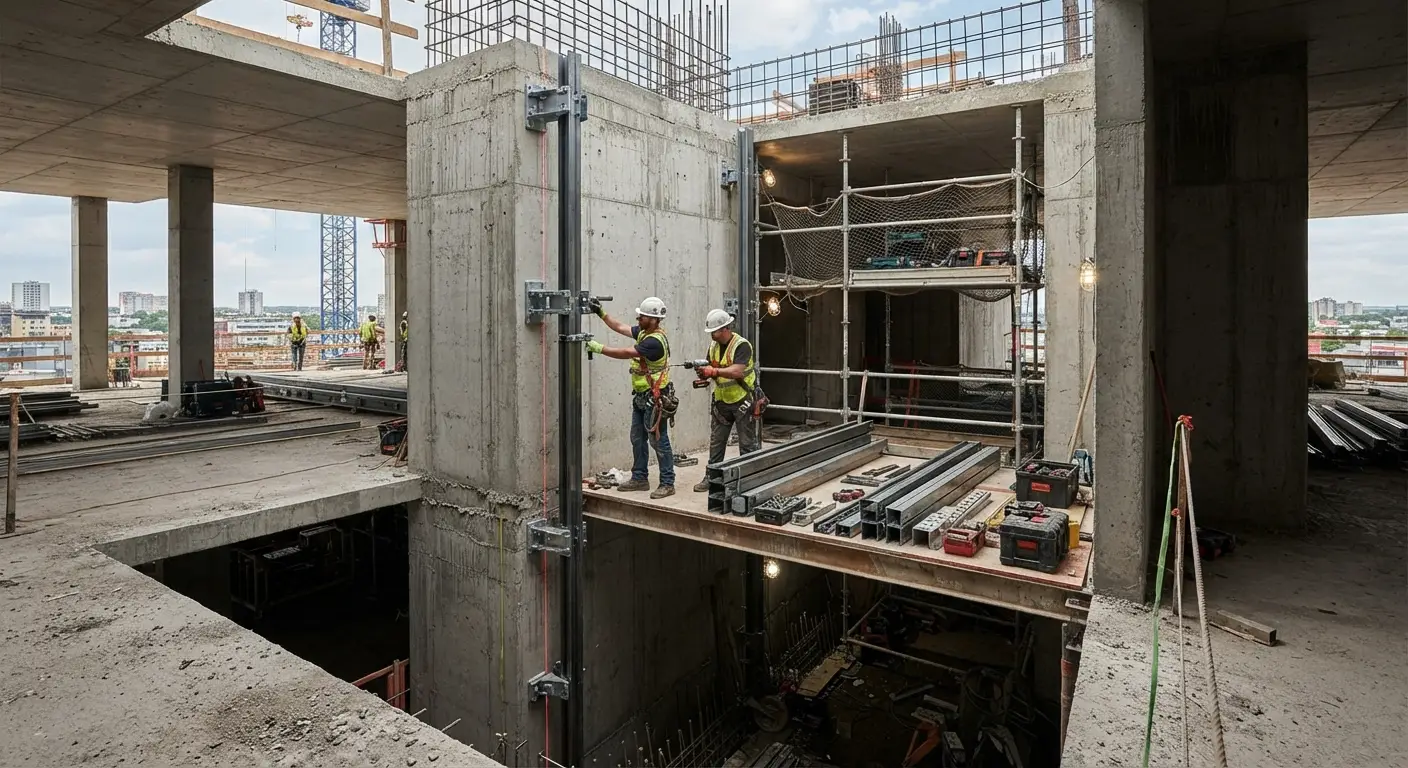
Hard fact: The most common cause of elevator installation delay in Nigeria is a shaft that is not ready when the equipment arrives. The elevator cannot be installed until the shaft is plumb, the pit is waterproofed, and the machine room (or MRL top support) is complete.
Typical Timeline: Order to Commissioning
For a standard traction elevator in a Nigerian commercial building, plan for 16 to 24 weeks from order to handover. That assumes the shaft is ready or will be ready within four weeks of order. Here is the breakdown:
| Phase | Duration | Responsibility |
|---|---|---|
| Order and technical drawings | 1‑2 weeks | Dove Lifts + architect |
| Manufacturing / stock availability | 4‑12 weeks | Dove Lifts |
| Shipping and customs clearance | 2‑4 weeks | Dove Lifts (if imported) |
| Shaft readiness (if not already complete) | 4‑8 weeks | Main contractor |
| On‑site installation | 4‑6 weeks | Dove Lifts |
| Testing and SON inspection | 1‑2 weeks | Dove Lifts + SON |
| Handover and training | 2‑3 days | Dove Lifts |
Practical total: 16‑24 weeks if the shaft is ready. Add 4‑6 weeks if shaft construction starts after order.
Hard fact: Traction elevators require a machine room or an MRL‑style top support. Unlike hydraulic lifts, they cannot be installed with a partially complete hoistway. The shaft must be weather‑tight, plumb within ±10mm, and have permanent power available for testing.
Shaft and Machine Room Readiness — The Main Delay Driver
The single biggest cause of delay is a shaft that is not ready when the elevator arrives. We have seen equipment sit in a Lagos warehouse for eight weeks because the builder had not finished the machine room slab or the landing doors.
What must be ready before installation begins:
- Shaft dimensions — verified against approved drawings. Width, depth, and plumb tolerance.
- Pit — excavated, concrete floor poured, waterproofed, and drained. Pit depth per model (typically 1.2m‑1.8m for traction).
- Machine room or MRL top support — slab cast, walls rendered, ventilation installed, and power available.
- Landing openings — cut to size, with temporary barriers for safety.
- Power supply — 3‑phase 415V, dedicated breaker, surge protection installed.
- Lighting — permanent or temporary lighting in shaft, pit, and machine room.
Hard fact: A shaft that is out of plumb by more than 10mm over its full height will cause rail misalignment, excessive noise, and premature guide shoe wear. Correcting it after installation costs more than doing it right the first time.
We recommend a joint site inspection with the main contractor and Dove Lifts two weeks before equipment delivery. This catches problems early.
Import and Clearance Lead Times
If the elevator is not in local stock, you must add import time. For Nigeria, that means:
- Shipping: 4‑8 weeks from China or Europe to Lagos port.
- Customs clearance: 2‑4 weeks (including SON CAP verification and duty payment).
- Port to site delivery: 2‑5 days depending on location.
Total import time: 8‑14 weeks in a best‑case scenario. Delays at Apapa or Tin Can Island ports can extend this.
How to reduce import time:
- Choose a supplier with local stock for standard models. Dove Lifts keeps common traction and MRL units in Lagos.
- Ensure SON CAP is applied for before shipment. Missing CAP delays clearance by weeks.
- Use a freight forwarder experienced in elevator equipment — not a general‑purpose agent.
Hard fact: SON CAP (Certificate of Authorization to Procure) must be obtained before the equipment leaves the factory. Without it, the shipment cannot clear customs. We handle this for every Dove Lifts import — included in our pricing.
If timing is critical, ask about our local stock availability — we can cut the import phase entirely for standard configurations.
Installation and Testing Phase
Once the shaft is ready and equipment is on site, installation takes 4‑6 weeks for a typical 5‑stop traction elevator. This phase includes:
- Week 1‑2: Rail installation, alignment, and bracket fixing. Machine or MRL sheave positioning.
- Week 3: Car assembly, door installation, counterweight loading.
- Week 4: Electrical wiring, controller mounting, travelling cable installation.
- Week 5: Slow‑speed testing, door operation, levelling adjustment.
- Week 6: Full‑speed testing, load test (125%), safety device verification.
Hard fact: Every traction elevator must pass a 125% load test before SON inspection. This means loading the car with 125% of its rated capacity (e.g., 1,250kg for a 1,000kg lift) and verifying the brake holds without drift.
Installation can be disrupted by power cuts, missing landing doors, or incomplete shaft lighting. We build contingency into our schedule — but the main contractor must keep the shaft available.
Commissioning and Handover Checklist
After installation, we run a formal commissioning process. This includes:
- Functional tests — door operation, levelling accuracy, speed, and ride comfort.
- Safety tests — overspeed governor trip, brake holding, emergency stop, ARD descent.
- SON inspection — official load test, document review, and Certificate of Conformity.
- Documentation handover — as‑built drawings, wiring diagrams, maintenance log, warranty certificate.
- Training — facility manager and security staff learn daily checks and emergency procedures.
Duration: 1‑2 weeks including SON inspection scheduling. SON inspection itself usually takes 1‑3 days, but the certificate may take a few days more.
Hard fact: You cannot legally operate a traction elevator in Nigeria without the SON Certificate of Conformity displayed inside the cab. Operating without it can lead to fines exceeding ₦500,000 and building closure.
We schedule a pre‑SON mock inspection one week before the official date. This catches any minor issues before the inspector arrives.
How to Build the Timeline into Your Construction Schedule
The best way to avoid delays is to treat the elevator as part of your critical path — not a finishing item.
Recommended sequence for a new build:
| Month | Activity |
|---|---|
| Month 1 | Finalise elevator specification with architect and Dove Lifts |
| Month 2 | Place order; begin shaft construction if not already done |
| Month 3‑4 | Shaft construction and machine room completion |
| Month 5‑6 | Equipment manufacturing and shipping |
| Month 6‑7 | Equipment arrives; installation begins |
| Month 7‑8 | Installation and testing |
| Month 8 | SON inspection and handover |
Key advice: Order the elevator as soon as the shaft dimensions are confirmed — do not wait until the building is nearly finished. We can hold equipment in our Lagos warehouse or schedule installation to match your programme.
Hard fact: For every month of delay in elevator handover, you lose rental income. On a commercial building in Lagos, one month of lost rent on a single floor can exceed ₦2M. Keeping the timeline tight pays for itself.
Frequently Asked Questions
Q: How early should elevators be ordered in a construction project?
A: At least 4‑6 months before the planned handover date. If importing, add 2‑3 months. If the shaft is not yet ready, we can store equipment locally and schedule installation when you are ready.
Q: What causes the most delays in Nigerian elevator installations?
A: Three things: (1) shaft not ready when equipment arrives, (2) SON CAP or customs clearance issues, and (3) power supply not available for testing. All three are avoidable with proper planning.
Q: Can installation run in parallel with finishing works?
A: Partially. Rail installation and machine positioning can happen while other trades work elsewhere. But door installation and final testing require a clean, unobstructed shaft. We coordinate with your main contractor to minimise overlap.
Q: Do you provide a timeline template for developers?
A: Yes. We have a project‑stage template that maps elevator milestones to your construction schedule. Request it below.
Building a Schedule?
If you are planning a traction elevator installation in Nigeria, do not guess the timeline. We will give you a realistic schedule based on your building type, shaft readiness, and equipment availability.
Contact Dove Lifts today for a project‑specific installation timeline. Our team will review your drawings, confirm shaft dimensions, and give you a written programme you can share with your main contractor.
Dove Lifts — Traction, MRL, freight, hospital, and home elevators installed across Nigeria and West Africa. Local stock, certified technicians, and timelines you can plan around.