When it comes to choosing the right lift for your building, the decision often comes down to two main options: hydraulic lifts and traction lifts. Both have been trusted for decades, and both have their advantages. But which one is right for your building?
At Dove Lifts, we’ve guided countless property owners, developers, and architects through this exact decision. In this article, we’ll break it all down so you can make an informed choice.
What Exactly Is a Hydraulic Lift?
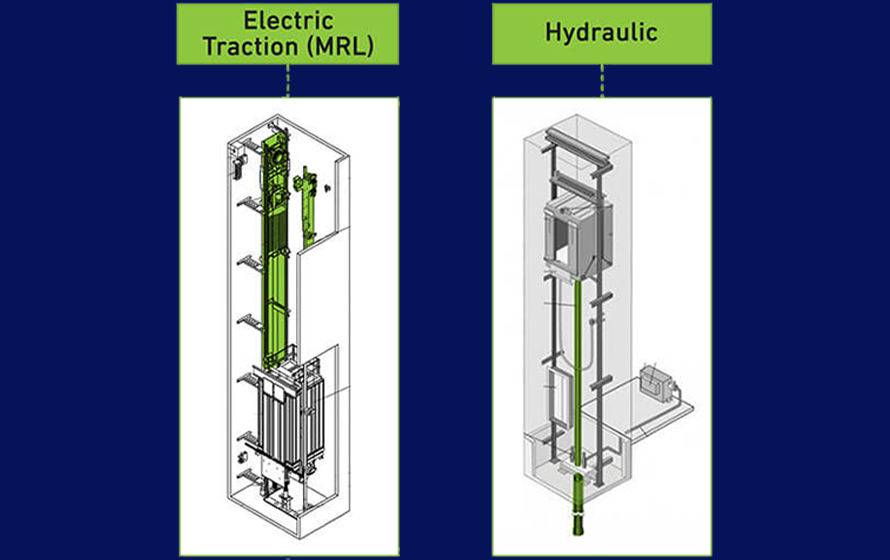
Hydraulic lifts are powered by a piston that pushes the elevator car upward using fluid pressure. When the lift needs to come down, the fluid is released back into a tank, allowing for a smooth descent.
They’re typically used in low to mid-rise buildings (up to 6–7 floors) and are especially popular in spaces where carrying heavy loads is a priority. Think hospitals, warehouses, and shopping centers.
Some highlights of hydraulic lifts:
- Smooth, quiet travel.
- No overhead machinery needed.
- Excellent for heavy-duty applications.
- Faster travel speeds.
- Energy efficient with modern gearless systems.
- Require some overhead space for machinery.
- Your building has six floors or fewer.
- You’re on a tighter budget for installation.
- The lift will be used for freight or heavy-duty purposes.
- You have limited space at the top of the building.
- Your building is taller than 6 floors.
- You want speed and efficiency for residents or visitors.
- You’re aiming for long-term cost savings.
- A sleek, modern solution is a priority.
- Emergency alarms and backup power.
- Door safety sensors.
- Compliance with all local and international safety standards.
- Free consultation to evaluate your building’s unique needs.
- Custom designs tailored to your space and budget.
- Professional installation that guarantees safety and reliability.
- Ongoing maintenance and modernization to keep your lift performing at its best.
- Hydraulic lifts are best for short buildings, heavy loads, and tighter budgets.
- Traction lifts are better for taller buildings, higher speeds, and energy efficiency.