Introduction
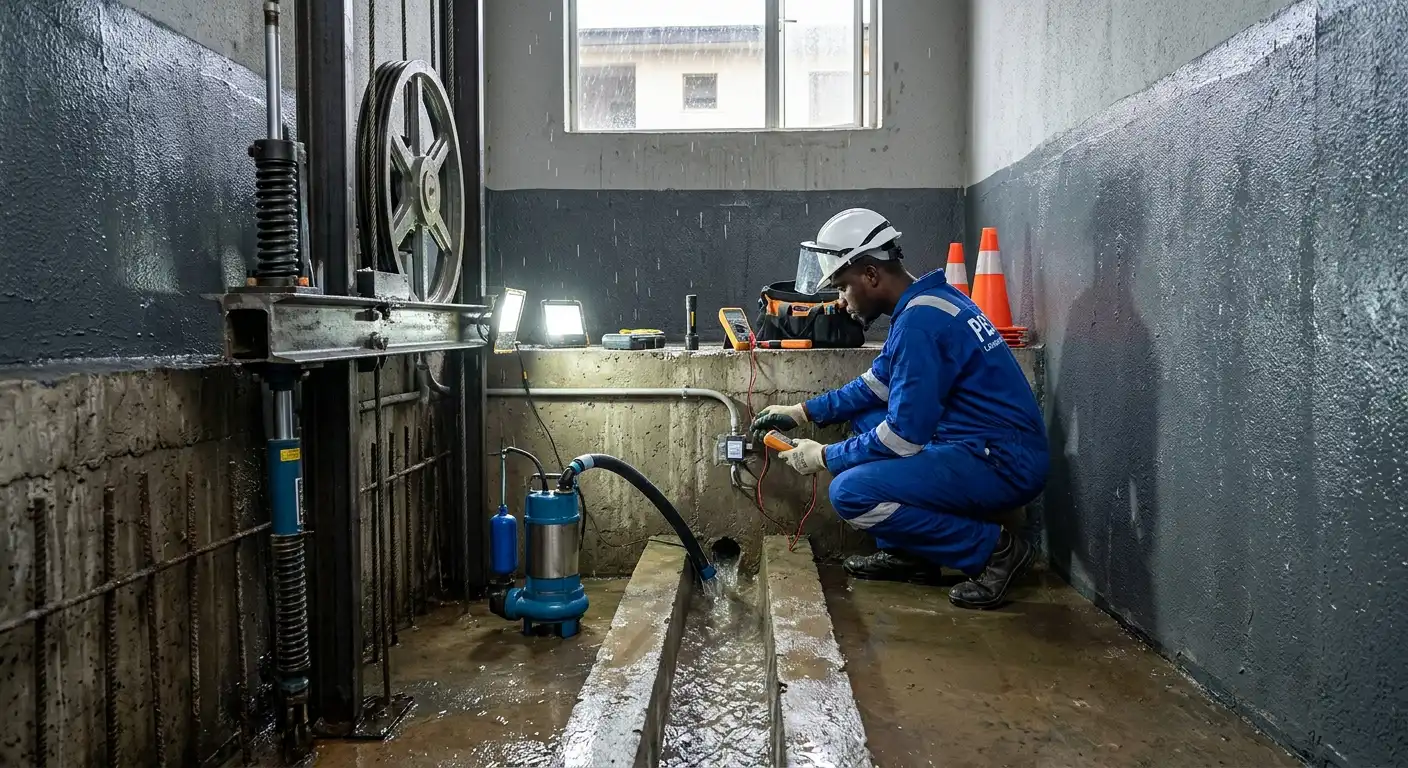
Every rainy season, Lagos building owners discover the same thing: water finds the elevator pit. Sometimes it arrives slowly, seeping through the pit walls over days of rain. Sometimes it arrives all at once, when a flash flood sends surface water down the ramp, through the ground floor, and into the shaft.
The consequences are expensive. Water reaching the pit floor damages the buffers, the pit ladder, the safety switches, and — most critically — the controller if it is mounted low. A flooded pit means the lift is out of service, sometimes for weeks, while the pit is drained, cleaned, inspected, and components replaced.
This is not an unlucky event. It is a predictable consequence of how the pit is designed and built. In Lagos, flood protection is not an optional upgrade — it is a design requirement for any elevator that will work reliably for twenty years.
This guide explains how flood damage happens, what protective measures actually work, and what to insist on before your next installation.
Hard fact: An elevator pit that floods damages the safety switches, buffers, and often the controller. Water ingress is one of the most common causes of lift downtime during Lagos rainy season, and it is almost always preventable at the design stage.
Why Lagos Elevator Pits Flood
Understanding the mechanism is the first step to preventing it. Elevator pits flood for five reasons.
1. High water table. Parts of Lagos — Lekki, Victoria Island, Ajah — sit on a high water table. During heavy rain, groundwater rises and finds its way through the pit floor and walls unless they are properly tanked.
2. Surface water ingress. Water running across the ground floor, or down a ramp, or through a poorly sealed landing door threshold, enters the shaft. Once inside the shaft, it runs down to the pit.
3. Missing or blocked drainage. A pit with no floor drain, or with a drain that clogs with sand and construction debris, collects water rather than discharging it.
4. Inadequate or failed sump pump. A sump pump that is undersized, incorrectly installed, or simply not maintained will not keep up during a heavy downpour. And a pump that fails during the heaviest rain — precisely when it is most needed — is a common failure.
5. Construction water. In new buildings, water from wet trades, curing, and incomplete waterproofing around the shaft enters the pit before the building is fully sealed.
Hard fact: The water table in Lekki and Victoria Island can rise significantly during the rainy season. A pit that stays dry in the dry season can be permanently wet during the rains without proper tanking.
For the retrofit case, where the shaft is being built into an existing structure with incomplete waterproofing, our guide on elevator retrofit in Lagos covers how flood protection is integrated into the scope.
Bridge: Understanding why pits flood makes the solutions clear.
Pit Waterproofing: The Foundation of Flood Protection
Waterproofing is the first line of defence. Without it, no pump will keep up.
External tanking. The most reliable approach is to tank the pit from the outside — a continuous waterproof membrane applied to the external faces of the pit walls and floor before backfilling. This is the standard approach in new builds and is the most durable solution.
Internal cementitious waterproofing. For existing pits, internal waterproofing using cementitious coatings is applied to the pit walls and floor. It is less durable than external tanking but effective when applied correctly and maintained.
Epoxy injection. For existing cracks, epoxy or polyurethane injection seals the crack from within. This is a repair measure rather than a prevention measure, and it is used where water is already finding a path through.
Floor and wall junctions. The junction between the pit floor and the walls is the most common water entry point. It must be treated with a fillet and reinforced waterproofing — not simply painted over.
What we frequently find in Lagos: Pits with no waterproofing at all, pits with a single coat of cement paint that has failed within a year, and pits where the waterproofing was applied but damaged during subsequent construction activity.
Hard fact: Waterproofing must be applied to a properly prepared, clean, cured substrate. Waterproofing applied to a dusty or damp surface will fail — often within the first rainy season.
Drainage and Sump Pumps: The Second Line of Defence
Even with good waterproofing, water can enter the pit. Drainage and pumping remove it.
Pit floor drain. The pit floor must slope gently toward a drain point, typically at one corner. The drain connects to the building drainage system — not to the sanitary sewer, which would create odour and backflow risk.
Sump and pump. A sump pit below the main pit floor collects water, and a submersible pump discharges it. The pump activates on a float switch when water reaches a defined level.
Pump sizing. The pump must be sized for the peak inflow — not the average. During heavy rain, inflow can be significant. An undersized pump runs continuously and fails.
Backup power. The sump pump must continue to work during a power outage — precisely when heavy rain is most likely. A pump with no backup power is a pump that may not be working when needed. This means either a battery backup pump or a connection to the building generator.
Redundancy. For high‑value installations, two pumps in the sump — a primary and a standby — provide redundancy. If one fails, the other continues.
High water level alarm. A float switch at a higher level triggers an alarm in the machine room or at the facility manager's station, alerting to water level rising faster than the pump can remove it.
Hard fact: A sump pump without backup power is not flood protection in Lagos, because the most likely time for heavy rain is also the most likely time for a power outage. The pump must run on battery or generator when mains power fails.
For the wider power backup discussion, our guide on NEPA‑proof elevators explains how ARD and generator systems integrate with the lift, and the same principles apply to pit pumps.
Bridge: Waterproofing and drainage deal with water that reaches the pit. The next measure is about what happens to the equipment when water does get in.
Elevated Controllers and Component Placement
This is the measure that determines how much damage a flooded pit actually causes.
The standard arrangement. In many installations, the controller and drive are mounted in the machine room — which is typically above the shaft and safe from water. For MRL lifts, the controller is mounted at the top of the hoistway — also safe.
Where the risk lies. The pit itself contains safety switches, buffers, the pit ladder, and the emergency stop. These can be damaged by water, but they are inexpensive to replace compared with the controller.
Elevating the low components. Where possible, safety switches and electrical components in the pit should be mounted above the maximum expected water level — not at the pit floor. This is standard practice in flood‑prone locations and is inexpensive to implement at installation.
Elevated controller for pit‑mounted configurations. In some installations — particularly hydraulic systems with remote power units, or where the controller is placed near the pit for design reasons — the controller must be mounted on a wall‑mounted bracket, well above the pit floor.
Raised cabling. Cabling running into the pit should be routed in conduit that enters the pit above the water line, not through the floor.
Hard fact: After flood damage in Lagos buildings, the lifts that continue operating are consistently those with elevated controllers, sealed electrical enclosures, and pit components mounted above floor level. Lifts with floor‑level controllers and open pit wiring are the ones that fail.
Water Sensors and Early Warning
Detection before damage is cheaper than repair after damage.
Pit water sensor. A float switch or electronic probe at the pit floor detects the presence of water and triggers an alarm.
Alarm location. The alarm should activate somewhere it will be seen — the machine room, the building's control room, or the facility manager's phone via SMS or app.
Integration with the lift controller. On modern lifts, a pit water sensor can be integrated with the controller to prevent operation if water is detected — preventing the car from descending into a flooded pit.
Regular testing. A sensor that has never been tested may not activate when needed. The sensor should be tested at every scheduled maintenance visit.
What we recommend for Lagos buildings: A pit water sensor with both a local alarm and an SMS alert, tested monthly. This is an inexpensive addition that gives the building owner warning before water reaches critical components.
Hard fact: A pit water sensor that activates an alarm in the machine room, where no one is present during heavy rain, provides no practical early warning. The alarm must reach someone who can act.
Protecting the Shaft at Ground Level
Water enters the shaft at the top, not just at the bottom. Ground‑level protection matters as much as pit protection.
Landing door thresholds. The ground floor landing door is where surface water most easily enters the shaft. A raised threshold, a water‑bar, or a small ramp can divert water away.
Landing door seals. Weather seals on the ground floor door reduce water entry through the gap between the door and the frame.
Drainage outside the door. A channel drain or slope outside the ground floor landing door diverts surface water away from the shaft.
Flood barriers. For buildings in flood‑prone areas, a removable flood barrier at the ground floor landing door can be deployed when heavy rain is forecast.
Machine room water entry. For machine room installations, the machine room must be dry. Water entering the machine room damages the controller and drive.
Hard fact: A landing door threshold that sits flush with the finished floor provides no water resistance. In Lagos buildings, a raised threshold of even 50mm makes a measurable difference during heavy rain.
What to Specify for a New Installation
If you are installing a new elevator in Lagos, these are the specifications that prevent flood damage.
External tanking of the pit. Specified as standard, not optional. The cost is modest compared with the cost of remediation after a flood.
Pit floor drain with proper connection. Connecting to the building drainage system, with a trap to prevent odour and backflow.
Sump pump with backup power. Sized for peak inflow, with battery backup or generator connection.
Pit components mounted above floor level. Safety switches, emergency stop, and wiring entry points elevated above the expected water line.
Pit water sensor with remote alarm. With SMS or app notification.
Sealed electrical enclosures. IP‑rated enclosures for all components in the pit.
Raised ground floor threshold. Specified in the architectural drawings, not left to site decision.
Hard fact: A pit designed with these measures costs more than an unprotected pit — but far less than the cost of remediating a flood‑damaged lift, which can include replacing the controller, the safety devices, and the pit wiring, plus weeks of downtime.
What to Do If Your Pit Already Floods
If you are dealing with an existing installation that floods, the remedy is a staged programme.
Step 1: Immediate water removal. Pump out the pit, remove debris, and dry the pit thoroughly. Do not attempt to operate the lift until the pit is dry and inspected.
Step 2: Component inspection. Inspect the buffers, safety switches, emergency stop, and pit wiring for water damage. Replace components that are damaged or suspect. Verify the controller if it is near the pit.
Step 3: Waterproofing repair. Identify where water is entering — through the walls, floor, or landing door — and repair the waterproofing. This may require external works if the pit is accessible.
Step 4: Drainage upgrade. Add or repair the pit drain and sump pump. Add backup power.
Step 5: Elevation of components. Move pit‑mounted electrical components above the expected water line where possible.
Step 6: Sensor and alarm. Install a pit water sensor with remote alarm.
Hard fact: A pit that has flooded once will flood again unless the waterproofing and drainage are addressed. Cleaning and replacing components without fixing the source of the water results in the same failure at the next rainy season.
For the retrofit context, where the shaft may be newly constructed inside an existing building, our guide on elevator retrofit in Lagos explains how waterproofing integrates with the structural works.
Frequently Asked Questions
Can a flooded elevator be repaired, or does it need to be replaced?
Usually repaired. The pit components and wiring are typically replaced, the pit is dried and waterproofed, and the lift is returned to service. The controller and drive are usually safe if they were mounted high. Full replacement is required only if the machine or major components were submerged.
How deep does the pit need to be for flood protection?
Pit depth is determined by the lift model, not flood protection. Flood protection comes from waterproofing, drainage, and pumping — not from depth. A deeper pit that is not waterproofed will still flood.
Does elevator insurance cover flood damage in Nigeria?
Standard policies often exclude flood damage unless a specific rider is added. Confirm with your insurer and add flood cover if the building is in a flood‑prone area. Insurance does not prevent the operational disruption of a flooded pit.
What is the most important single measure for flood protection?
Pit waterproofing. Without it, no amount of pumping will keep up. With it, the pump handles only what gets past the waterproofing.
Can I add flood protection to an existing elevator?
Yes. Internal waterproofing, pit drain installation, sump pump with backup, elevation of pit components, and a water sensor can all be retrofitted. The scope depends on the current condition and the water entry points.
How often should the sump pump be tested?
Monthly at minimum, and before each rainy season. The test should confirm the float switch activates the pump and the pump discharges correctly. During heavy rain, the pump should be monitored.
What is the maximum water level the pit should be designed for?
Design for the highest water table level and the maximum surface water inflow that could reasonably occur. This is determined by site conditions — a Lekki plot with a high water table is a different design problem from an Ikeja plot with good drainage.
Does a pit water sensor stop the lift from operating?
On modern controllers, yes — the sensor can be integrated to prevent operation when water is detected. On older controllers, the sensor may only trigger an alarm. The integration should be specified at installation.
Hard fact: A sump pump that is not tested monthly will eventually fail during a heavy rain event, because that is when it runs most and when a latent failure is most likely to manifest.
Worried About Your Elevator During the Next Rainy Season?
If your pit has flooded before, or if your building sits in a flood‑prone area of Lagos, the time to act is before the next rainy season, not after.
We will inspect your pit, identify where water is entering, and recommend a protection programme appropriate to your installation. This includes waterproofing, drainage, pump specification, elevation of components, and water sensor installation. We will give you a written report with the scope of works clearly separated.
We do not publish fixed figures for pit waterproofing or drainage works, because scope varies by pit condition, water entry points, and access. What we can do is survey your installation and give you a written proposal.
Send us your lift details — pit condition, history of flooding, and building location. We will tell you what protection your pit actually needs.
👉 Speak to Dove Lifts about flood‑proofing your elevator
Dove Lifts — Traction, MRL, hydraulic, and freight elevator installation, modernization, and maintenance across Nigeria and West Africa. Pit waterproofing, drainage design, and flood protection for Lagos buildings.