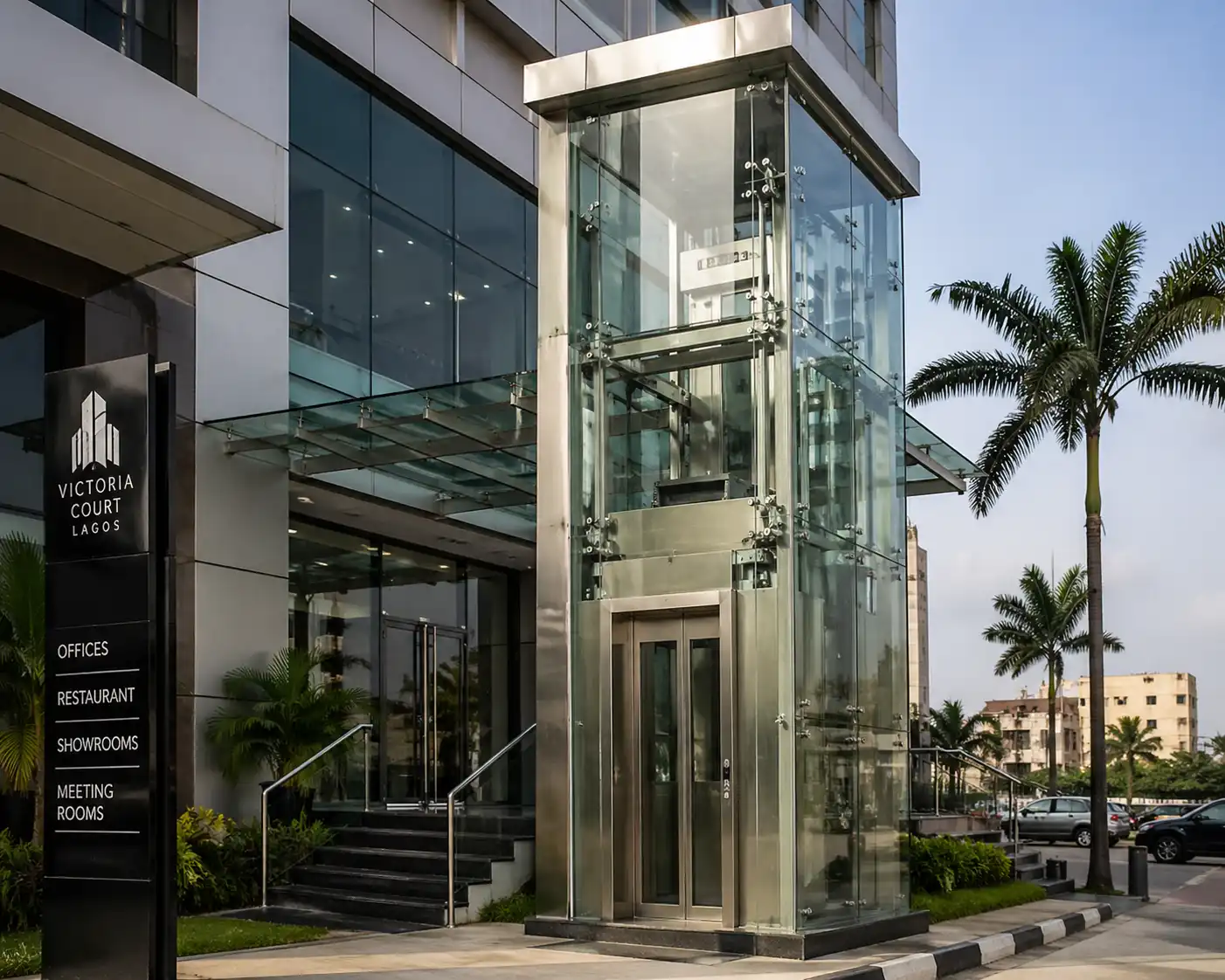
You need three permits before you retrofit an elevator in Lagos. You cannot just start building an external shaft. The Lagos State Building Control Agency, Fire Service, and SON all require approval. Missing a permit can stop your project and cost you fines. Here is exactly what you need – and how to get it without becoming a bureaucrat.
The Three Permits You Must Have
To retrofit an elevator in Lagos, you must secure three permits. You need LASG Building Control approval for any structural change. You need Fire Service approval if your external shaft could affect fire escape routes. You also need a SON CAP certificate for the lift equipment before it arrives. Start the LASG process early because it can take four to eight weeks.
The LASG Building Control permit is the most important. A hard fact: Under the Lagos State Building Control Law 2010, any alteration that changes a building’s structure requires prior approval. Cutting a new opening in every floor or building an external steel hoistway both fall under this law. The application goes to the district LASG office. For a building in Surulere, you submit to the Surulere area office. For a property in Eti‑Osa, you visit the Victoria Island office. You will need a structural engineer’s report stamped by a COREN‑registered professional. The report must confirm the existing foundation can carry the added weight of the new shaft and traction drive system. In coastal Lekki, the saline soil often needs deeper foundation checks. We arrange this report for you.
The Fire Service approval comes next. An external shaft must not block any designated fire escape path. The Lagos State Fire and Rescue Service inspects the proposed location. They check that the new hoistway does not narrow a staircase or obstruct a fire truck access route. In many older buildings in Yaba, the only external space is a narrow side yard. The fire officer will measure the remaining clearance. If the passage drops below 1.2 metres, the permit will be denied. We work with fire consultants early to adjust the shaft footprint before you spend money. A hard fact: The National Fire Code 2019 requires a minimum one‑hour fire rating for the shaft enclosure if it is within three metres of a property line. We use fire‑rated panels and doors that meet this standard.
The third permit is the SON Conformity Assessment Programme certificate. This is a pre‑import approval for the lift system. You apply through an accredited SON agent. The certificate confirms the equipment meets NIS 326:2017 and EN 81‑20 safety standards. You need the CAP certificate before the lift arrives at the port. Without it, Nigerian Customs will not clear the shipment. We handle the SON CAP application for every Dove Lifts retrofit. We include the factory test certificate and the load capacity calculations. Once you have all three permits, your project can move forward without legal risk.
Lagos humidity and power fluctuations also shape how we prepare the permit package. The single‑line electrical diagram must show surge protection devices. The structural report must account for corrosion‑resistant steel in the external shaft. We add these details so the reviewing officer sees a complete plan. Once your permits are in hand, the real construction can begin. The next step is to understand the serious consequences of skipping this process.
[Image: A close-up of a building plan with a red stamp showing LASG Building Control approval, placed on a desk with a Lagos State Fire Service approval letter beside it.]
What Happens If You Skip Permits
If you skip elevator retrofit permits in Lagos, the fines range from ₦500,000 to ₦1,000,000. LASG can seal your building until you comply. Your insurance claims for any lift‑related injury will be denied. When you sell the property, a buyer’s lawyer will find the gap and cut the price. We have seen this happen many times.
The enforcement is real. In Ikeja, a commercial building owner built an external shaft for a new traction drive lift without LASG approval. A neighbour reported the construction noise. A LASBCA inspection team visited the site within three days. They issued a stop‑work order and a ₦500,000 fine. The owner then had to apply for the permit anyway. The total delay was over four months. The building lost tenants who grew tired of waiting for the vertical transportation to be completed. A hard fact: Section 75 of the Lagos State Building Control Law gives LASBCA the power to demolish any unapproved structure at the owner’s expense. An external shaft is a structure. The risk is not just a fine.
Insurance denial is another painful result. Standard property insurance in Nigeria requires all major installations to have the correct permits. If a lift user gets injured in an unapproved shaft, the insurer will point to the missing LASG permit and refuse to pay. The liability then falls on you as the building owner. In a Lekki Phase 1 apartment block we later regularised, the owner had paid for private health cover for a tenant hurt by a faulty door interlock. The insurance firm refused to reimburse him. The missing permit voided the claim.
When you sell the property, a competent buyer’s lawyer will demand the LASG permit and the SON CAP certificate during due diligence. If you cannot produce them, the buyer will either walk away or negotiate a sharp price reduction. We have seen a ₦150 million building in Victoria Island drop in value by ₦15 million because of unapproved lift work. The seller had to complete the permit process after the sale agreement was signed, causing further delay and legal fees. The lift system itself might be perfect, but the paperwork gap alone was costly.
Our permit service prevents all these headaches. We prepare every document, lodge the applications, and accompany the inspectors. You pay the official government fees, and we do the running around. The entire process becomes a fixed‑line item in your project budget.
For a deeper look at the full retrofit journey, read our pillar post on Elevator Retrofit Lagos. For the combined rules of SON and LASG, see SON & LASG Elevator Compliance.
Don’t let paperwork delay your project. Let Dove Lifts manage every permit – you pay the government fees, we do the running around. Contact us for a fixed‑price permit service.