Elevator Retrofit in Lagos – Add a Lift to Your
Existing Building (2026 Guide)
Lagos has thousands of older buildings in Surulere, Yaba, Ikeja, and parts of Victoria Island built without elevators. Today, ageing owners, tenant expectations, and property value goals are driving retrofits. This guide covers feasibility, retrofit types, cost indicators, permits, and a real Lagos case study.
But can you really add an elevator to a building that was never designed for one? Yes, in most cases. However, the process requires careful planning, structural checks, and the right choice of technology.
By the end, you will know how to move from “I wish I had a lift” to “my building is now elevator‑ready.”
Quick answer
Most Lagos buildings can be retrofitted with an elevator using an internal void conversion, a new internal shaft, or an external shaft. The deciding factors are shaft space, overhead clearance, and structural capacity.
Can You Install an Elevator in an Old Building?
The short answer is yes — but not every building qualifies without modifications. Three critical requirements determine feasibility.
An elevator needs a vertical shaft — a clear path from the lowest level to the top floor.
- Use an existing void: lightwells, courtyards, oversized stairwells. Cheapest and least disruptive.
- Build an internal shaft: create a shaft by cutting openings and reinforcing floors/walls.
- Build an external shaft: attach a new shaft outside the building to minimize tenant disruption.
For modern MRL elevators (often best for retrofits), you typically need around 3.8m from the finished floor of the top landing to the underside of the roof slab/ceiling.
If ceilings are lower, options may include low‑clearance MRL (down to ~3.5m) or hydraulic alternatives. A site survey is the only way to confirm.
Adding an elevator introduces new loads (car, counterweight, guide rails, passengers) transmitted to the foundation and shaft supports.
A COREN‑registered structural engineer assesses foundation point loads, slab landing loads, and wall capacity for guide rail brackets. Reinforcement (jacketing, steel beams) often solves issues and is usually less than the value the lift adds.
Bottom line Very few buildings are outright impossible to retrofit. The question is usually “how much will it cost and is it worth it?”
Three Types of Retrofit – Which Is Best for You?
Most retrofits fall into one of three categories. The right choice depends on layout, budget, and disruption tolerance.
What it is: convert an existing void (stairwell, lightwell, service duct) into a shaft; cut landings and run the lift inside the original space.
Best for: buildings with generous stairwells or courtyards.
Disruption: moderate (internal noise/dust, but stairs often remain usable).
Cost indicator: generally most affordable; avoids building a new shaft from scratch.
What it is: build a new shaft outside the building (concrete block, steel frame with cladding, or glass). Cut landing doors at each floor.
Best for: buildings with no internal space for a shaft (common in Lagos plots).
Disruption: low; most work happens outside; internal cut‑ins can be phased.
Cost indicator: higher than through‑shaft; glass is premium but adds strong aesthetics.
What it is: self‑contained platform lift for 2–3 floors with low speed; sometimes enclosed or open‑type with safety gates.
Best for: churches, schools, small offices; wheelchair access retrofits in low‑rise buildings.
Disruption: minimal; often installed in days with limited building modifications.
Cost indicator: lower than full passenger elevators but with limits (capacity/speed/traffic).
How to choose
If you have an existing void, through‑shaft is often best. If you do not, an external shaft is the workhorse solution. Platform lifts are only for very low‑rise, low‑traffic projects.
Cost Breakdown – What to Expect for a Lagos Retrofit
Every retrofit is custom‑engineered, so there is no single price. Most costs fall into five categories.
Example – 5‑stop external MRL retrofit (indicator)
A 5‑storey Surulere building with no internal void, choosing an external glass MRL elevator, can fall in the range of tens of millions of Naira when you include feasibility, shaft, equipment, install/electrical, permits, and training. The return can still justify it for well‑located assets.
Case Study – 7‑Storey Building in Surulere Retrofitted with MRL
Here is an example of a real Lagos retrofit outcome.
Project overview
- Building: 7‑storey mixed‑use property in Surulere (late 1980s), retail at ground floor, apartments above.
- Challenge: no internal void; narrow stairwell; external shaft required.
- Solution: external glass shaft + 5‑stop MRL elevator, 600kg capacity, automatic sliding doors, stainless steel finish.
- Financing: part financed via lease‑to‑own arrangement.
Client quote: “I wish I had done this ten years ago. The lift is the first thing new tenants ask about, and now I have to turn people away. Dove Lifts made the process painless — they handled permits, construction, and even gave me a payment plan.”
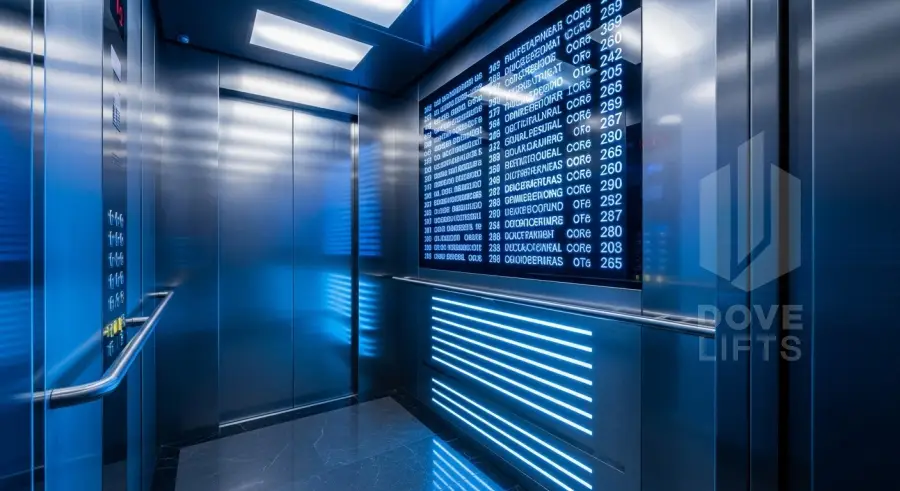
The retrofit increased rent, reduced vacancy, and boosted valuation. In prime Lagos locations, this pattern is common when the building becomes “elevator‑ready.”
Permits You Need for Retrofit in Lagos
You cannot skip the paperwork. Operating an uncertified elevator risks fines, closure, and liability. Here is what you need.
Dove Lifts service
We manage the entire permit chain — from initial CAP to final LASG completion — as part of our retrofit package. You focus on your building; we handle the bureaucracy.
Free Feasibility Check – Can Your Building Take an Elevator?
You have read the guide. Now you need an answer for your specific building.
Send photos of the stairwell, external walls, and potential shaft locations via WhatsApp. Include floor plans (if available) and approximate floor‑to‑ceiling height.
Our engineer reviews your images and gives an initial opinion on feasibility and which retrofit type fits (through‑shaft, external, or platform).
If positive, we recommend a detailed measurement + COREN structural assessment + fixed‑price quote. The study fee is credited to installation if you proceed with Dove Lifts.
We have completed retrofits across Lagos — Lekki villas, Surulere apartment blocks, Ikeja offices — and we know the local building stock and regulatory process.
Start now
Send a WhatsApp message to 0800 DOVE LIFTS with the word RETROFIT and photos of your building. We respond within 24 hours.
Frequently Asked Questions about Elevator Retrofits in Lagos
How long does a retrofit take from start to finish?
From feasibility study to handover, typically 3–6 months, depending on permits and construction complexity. External glass shafts usually take longer than internal conversions.
Will my tenants have to move out during installation?
Usually no. External shafts keep disruption low. Internal through‑shaft retrofits can be noisier and may require temporary access planning, but most projects are staged to keep tenants in place.
Can a building without a pit get an elevator?
Yes. Platform lifts and some low‑pit designs can work with shallow pits (0.2–0.5m) or near‑pitless configurations, depending on site conditions and safety requirements.
Is a glass external shaft safe?
Yes. Properly engineered systems use tempered and laminated glass similar to curtain wall facades and comply with applicable building safety requirements for impact resistance.
What happens if my building lacks 3‑phase power?
Options include phase converters or specifying smaller systems where appropriate. For full passenger elevators, upgrading to 3‑phase is generally recommended for stability and performance.
Do you offer financing for retrofits?
Yes. We offer lease‑to‑own and hire‑purchase plans tailored for retrofit projects, often aligned with the additional rental income generated.
Final Thoughts – Retrofit Adds More Value Than You Think
Many building owners hesitate because retrofit costs seem high. In Lagos real estate, an elevator is a capital improvement that can increase rent, boost resale value, attract better tenants, and future‑proof the building for an ageing population.
Buildings that ignore elevators will become less competitive. Retrofitting early captures value before neighbouring properties do.
The first step is free — a quick feasibility check. You have nothing to lose and a much more valuable building to gain.
Ready to Make Your Building
Elevator‑Ready?
Book a retrofit assessment to measure shaft options, overhead, pit potential, power availability, and structural requirements. You get a clear recommendation (internal vs external vs platform) and a project‑specific quotation path.
What we check
Potential shaft locations, landing cut‑ins, overhead clearance, foundation/pit feasibility, electrical readiness, and permit pathway (LASG + SON).